
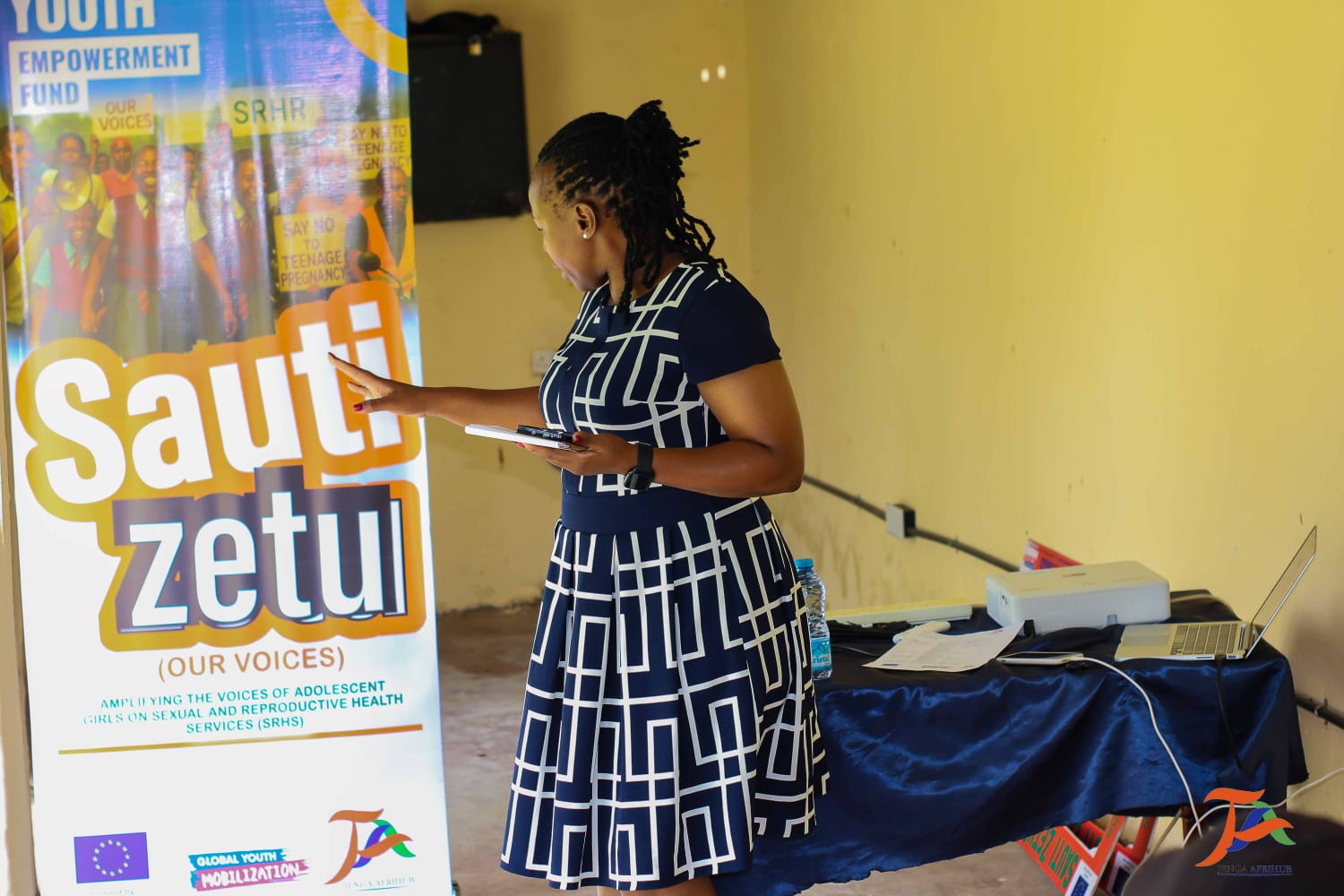
Sauti Zetu
An EU-funded SRHR awareness programme amplifying adolescent voices through 10 disability-inclusive school clubs across Teso North.
10
School Clubs
Ages 10–16
Target Group
Disability-Inclusive
Approach
EU-Funded
Funder
About Sauti Zetu
Sauti Zetu (Swahili for "Our Voices") is a youth-focused, community-driven project funded by the European Union and implemented in Teso North sub-county, Kenya. It is designed to amplify the voices of adolescents — particularly girls — on issues related to sexual and reproductive health (SRH). Sauti Zetu aims to increase access to Sexual and Reproductive Health and Rights (SRHR) information and services for adolescents, especially early to middle adolescents (ages 10–16), including those living with disabilities.
Target Group
Adolescents aged 10–16
Methodology
School clubs + creative expression
Reach
10 school clubs
Funder
European Union
The Challenge
In Teso North, SRHR remains a sensitive and often under-discussed topic. Access to inclusive, age-appropriate SRHR services is limited, and conversations around sexuality are frequently silenced due to stigma, cultural taboos, and social barriers. In response, Sauti Zetu is working to dismantle these barriers by promoting informed, inclusive, and positive SRHR practices. At its core, the project empowers adolescents — particularly girls — to speak up, learn, and make confident, informed decisions about their health and futures.
The project embraces an inclusive, youth-led approach to SRHR education, rooted in creativity, community dialogue, and empowerment. By equipping young people to lead conversations, produce content, and develop innovative solutions, Sauti Zetu ensures their voices are not only heard but acted upon.
Sauti Zetu also responds directly to the rising cases of unintended teenage pregnancies in the region. Through school-based programming and strong community engagement, the project provides adolescents with accurate information, builds their confidence, and fosters safe spaces for dialogue and support.
How We Work
School Clubs
The project is implemented through existing school clubs in 10 schools across Teso North, creating safe and supportive environments where young people can access information, express themselves, and advocate for their rights.
Creative Expression
By equipping young people to lead conversations, produce content, and develop innovative solutions, Sauti Zetu uses art, drama, poetry, music, and sports to engage adolescents around SRHR themes in ways that are accessible and culturally resonant.
Community Stakeholders
In addition to working with adolescents, Sauti Zetu actively involves key stakeholders and duty bearers — including teachers, parents, faith leaders, and community health volunteers — whose capacity is strengthened to better support adolescent SRH outcomes.
What We Aim to Achieve
Increase SRHR awareness and access among early to middle adolescents (10–16 years).
Promote inclusive, stigma-free SRHR education, particularly for adolescents with disabilities.
Strengthen adolescents' decision-making abilities around sexuality and reproductive health.
Use creative expression — including art, drama, poetry, music, and sports — to empower youth as SRHR advocates.
Youth Voices
"Our Sauti Zetu club is the only place I can ask questions about my body without being embarrassed. The drama activities make it easy to talk about things we would never say out loud otherwise."
"I didn't understand why girls miss so much school. After joining the club I started talking to my parents about what my classmates go through. Things are slowly changing in my home."
All testimonials are anonymised to protect participant privacy.
Programme Gallery
Programme photos — replace with real images before launch.
Sauti Zetu Project Brief
Download our 2-page overview for partners and funders.
Funded by